Explore Florida’s best sub-$500K real estate investment markets for 2026, including Jacksonville, Tampa, Orlando, and coastal opportunities.
1. The 2026 Florida Real Estate Landscape: Insurance Relief vs. Condo Reserve Risks
Understanding where to deploy capital under $500,000 requires navigating a new economic landscape shaped by insurance stabilization, condo law overhauls, and federal lending rules:
- Residential Insurance Premium Stabilization: Property insurance overhead is showing signs of stabilization, highlighted by an 8.7% average statewide premium reduction for residential policies from Citizens Property Insurance and the early termination of emergency assessment surcharges.
- Mandatory Structural Reserves & Special Assessments: State legislation mandates that condo associations governing buildings three stories or higher complete Milestone Inspections and Structural Integrity Reserve Studies (SIRS). Because owner votes can no longer waive or underfund structural reserve contributions, many older condo complexes are levying special assessments ranging from five to six figures per unit.
- Strict Federal Financing Mandates: Federal lending guidelines require full balance sheet audits and cap master policy wind deductibles at 5% of coverage, making non-compliant condo units non-warrantable and ineligible for conventional mortgages.
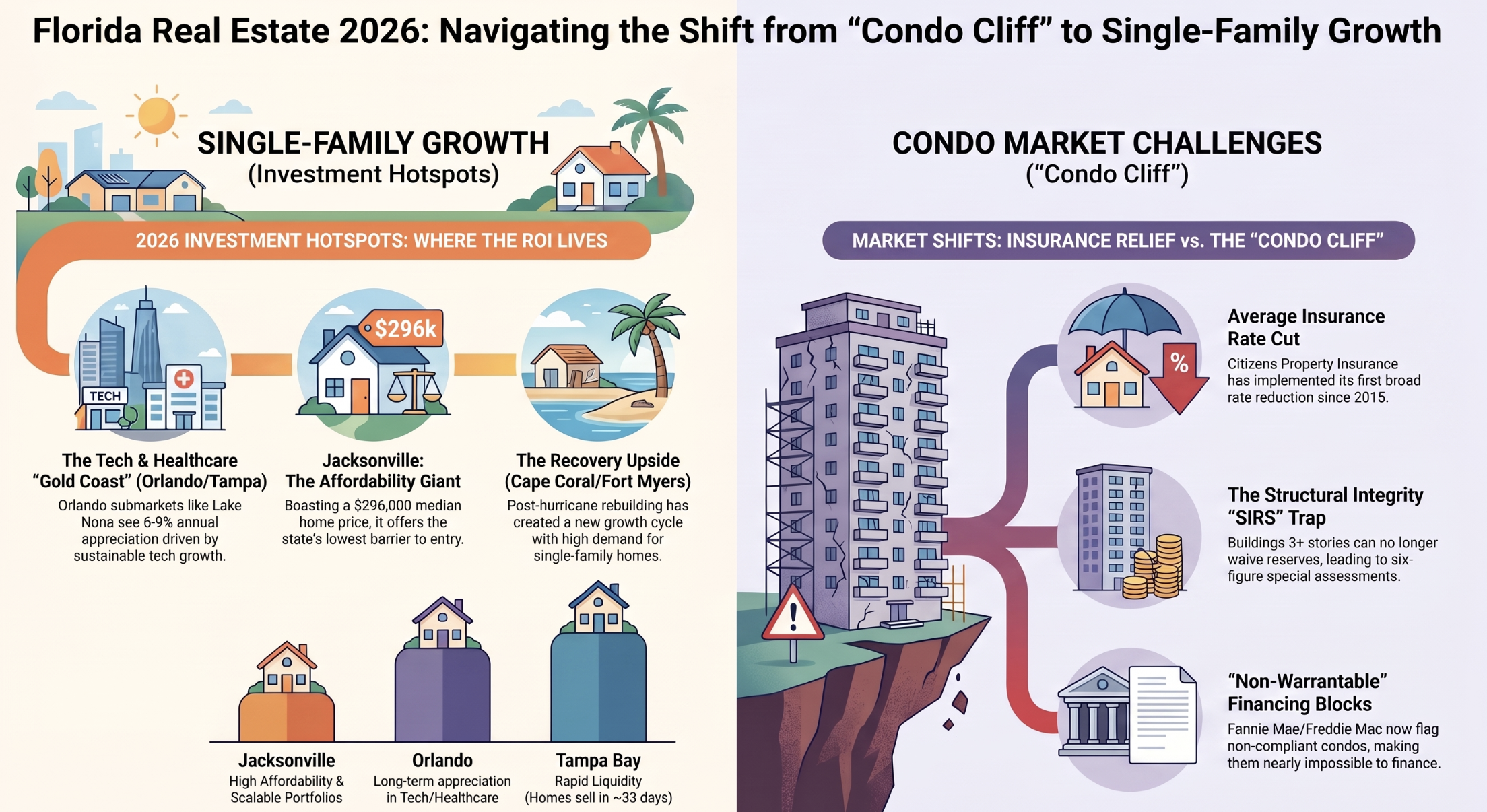
Strategic Takeaway: To avoid unexpected assessments and financing roadblocks, savvy investors targeting properties under $500,000 are pivoting heavily toward single-family homes, townhomes, and non-HOA properties in high-growth metro corridors.
2. Top Sub-$500K Investment Markets in Florida
Jacksonville: The Low-Ticket Cash-Flow Champion Jacksonville remains Florida’s premier low-ticket market for cash-flow-focused investors. With a citywide median price of $296,000 to $300,000 and gross rental yields ranging from 6.0% to 8.5%, Jacksonville offers a low barrier to entry backed by healthcare, military, and logistics employment hubs.
- Northwest & Mid-Westside ($150,000–$250,000): High-yield entry submarket generating 7.5%–8.5% gross yields on single-family rentals.
- Arlington & Southwest Jacksonville ($250,000–$350,000): Balanced suburban communities yielding 6.3%–7.6% with steady family tenant pools.
- Riverside & Jacksonville Beach ($350,000–$500,000): Premier appreciation submarkets offering ~5.5% gross yields alongside strong tenant retention.
Tampa Bay Metro: Corporate Expansion & Balanced Growth Tampa Bay combines rapid corporate job growth with strong demographic appeal. Metro single-family entry prices average $389,000 to $450,000, delivering gross rental yields between 5.9% and 8.2%.
- East Tampa & Temple Terrace ($240,000–$340,000): Top cash-flow submarket yielding ~8.2% gross near major medical and tech centers.
- Riverview, Brandon & Wesley Chapel ($330,000–$460,000): High-demand suburban expansion corridors yielding 6.4%–7.1% on modern single-family builds and townhomes.
- Seminole Heights & Tampa Heights ($420,000–$495,000): Urban core single-family homes offering lower cash flow (~5.9% yield) but higher long-term equity growth.
Greater Orlando: Workforce Stability Meets Vacation Demand Greater Orlando features a bifurcated market spanning long-term workforce rentals and high-yield vacation properties. With submarket entry prices averaging around $380,000, Orlando properties deliver gross yields between 7.2% and 10.5%.
- Sanford & Altamonte Springs ($300,000–$390,000): Workforce housing corridor generating ~8.7% gross yields supported by technology and healthcare expansion.
- Kissimmee / Osceola Short-Term Rental Corridor ($320,000–$450,000): Purpose-built short-term rental zones producing gross yields up to 10.5% catering to tourist demand.
- Winter Garden & Horizon West ($400,000–$495,000): Master-planned suburban developments yielding ~7.2% with high median household incomes.
Southwest & Inland Florida (Cape Coral, Port Charlotte, Ocala)
- Cape Coral ($345,000–$369,000 median): Features strong waterfront single-family inventory, with vacation rental gross yields reaching up to 12.7% during high season.
- Port Charlotte ($264,000–$399,900 median): Provides turnkey single-family builds generating net cap rates around 6.5%.
- Ocala ($266,000–$280,000 median): Offers low entry prices supporting consistent long-term rental demand in logistics and healthcare.
3. Navigating Coastal Metros Under $500K (Miami, Fort Lauderdale, Naples)
In coastal South Florida, acquiring properties under $500,000 requires careful capital structuring:
- Miami: Ranked among the top national markets for overall real estate prospects, Miami offers sub-$500K options concentrated in 1-bedroom and studio condos across Edgewater, Downtown, and Brickell ($350,000–$480,000) with 5.4% to 7.2% gross yields. However, high mortgage rates relative to cap rates create negative leverage, making all-cash or 50%+ equity structures necessary to prevent monthly cash losses.
- Fort Lauderdale: The strongest sub-$500K opportunities sit in the inland Northwest corridor ($300,000–$430,000), where single-family rentals yield 8.2% gross without condo reserve risks.
- Naples: In Golden Gate City ($320,000–$450,000), investors target non-HOA single-family properties yielding 8.2% gross.
4. Strategic Investor Playbook for 2026
-
Prioritize Single-Family & Townhomes: Focus on single-family properties in Jacksonville, Tampa suburbs, or Greater Orlando to avoid association reserve deficits and milestone inspection liabilities.
-
Audit Property-Specific Insurance Early: Request insurance quotes and wind mitigation reports before making offers to take advantage of statewide rate cuts.
-
Utilize DSCR Financing: Leverage Debt Service Coverage Ratio (DSCR) loans to qualify based on property rental cash flow rather than personal income tax returns.
Written by
Under500K Team
Research and market insights for global property investors.