The Triangle's Tech-Fueled Real Estate Boom: What to Know in 2026 The Raleigh-Durham region is rapidly transforming into a Southeast tech powerhouse, fueled by massive expansions from industry giants like Apple, Google, and VinFast. This influx of high-paying tech jobs and an expected 500,000 new residents are reshaping the local real estate landscape.
1. The Strategic Value Proposition: Why Durham, Why Now?
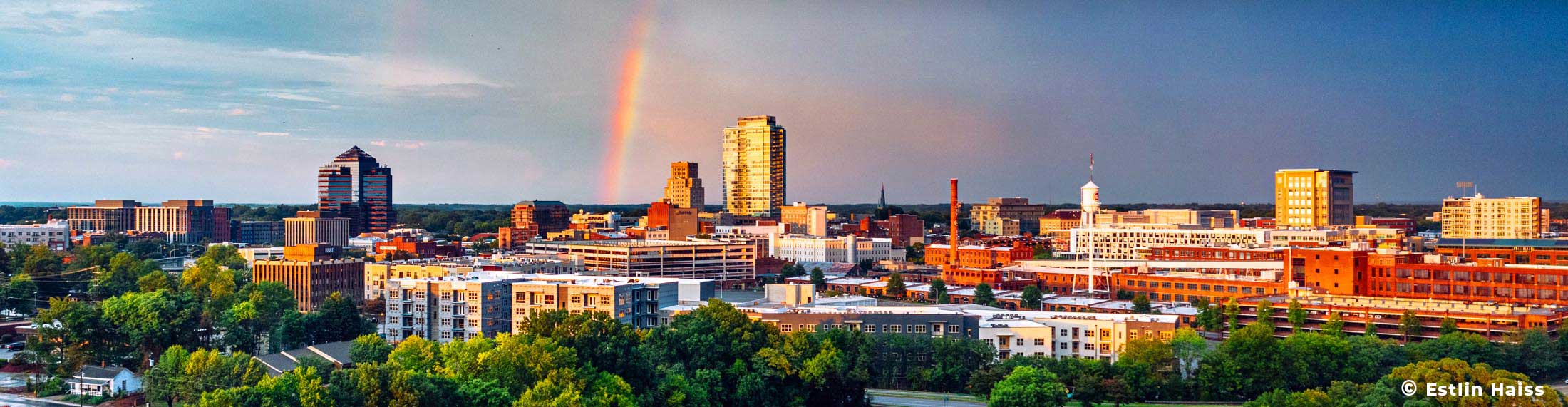
Durham has effectively transitioned from its legacy tobacco and textile roots into a global "meds and eds" rocket ship. As of early 2026, the city has solidified its status as the more historic, arts-driven counterpart to Raleigh within the Research Triangle. This evolution is anchored by the Research Triangle Park (RTP)—the nation’s largest research park—and a talent pipeline fueled by Duke University and North Carolina Central University (NCCU).
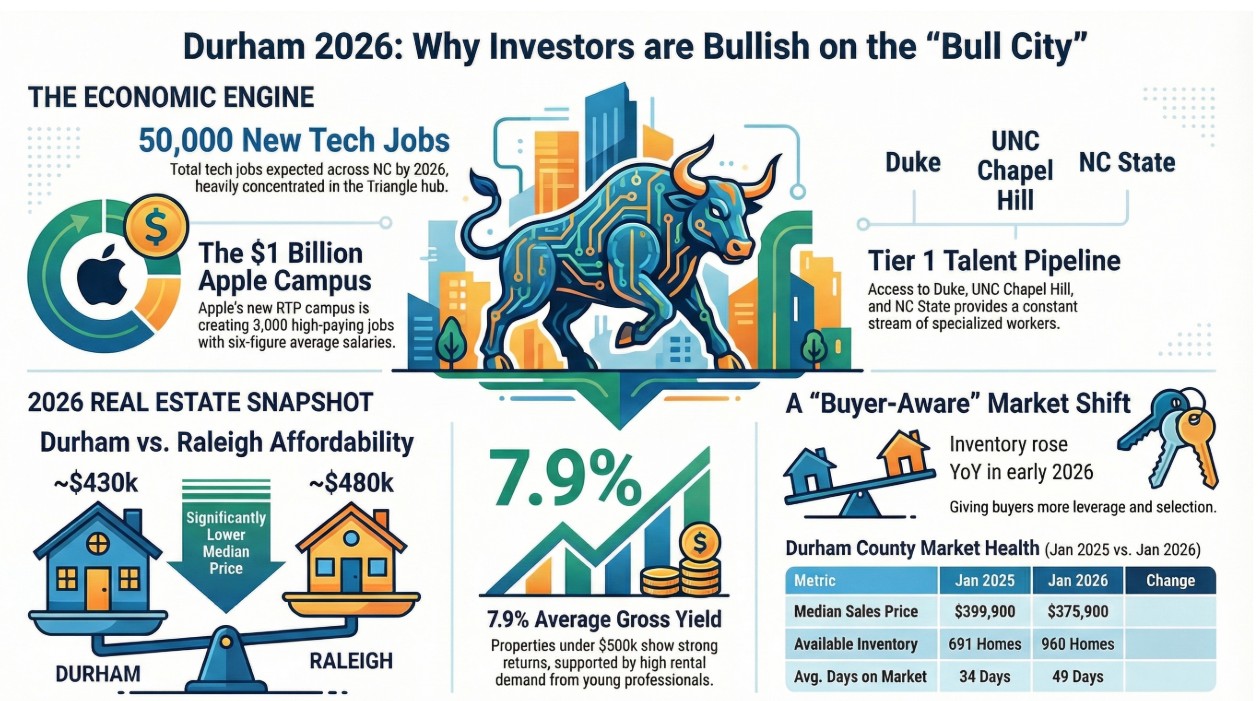
The "So What?" Factor: The structural demand floor is currently being reinforced by a massive influx of Big Tech and healthcare capital. Beyond the well-publicized $1 billion Apple campus and Google’s Cloud engineering hub, the new Children’s Hospital in Apex (projected to add 8,000 jobs) and the continued expansion of the Duke Health system act as significant market stabilizers. For investors, this ensures a high-income tenant base (salaries ranging from $80k to $150k) that insulates the market from the volatility seen in more speculative Sun Belt metros.
2. The $500k Price Band: Market Entry & Inventory Analysis
The early 2026 market is characterized by a "buyer-aware" correction phase. While the median price reached approximately $430,000 by March, strategic entry points still exist near the $375,900 mark—representing a -2.4% to -2.7% year-over-year price adjustment. This correction, combined with a 38.9% increase in available inventory, has granted buyers the leverage to negotiate list price percentages (averaging 97.4%) and terms that were non-existent two years ago.
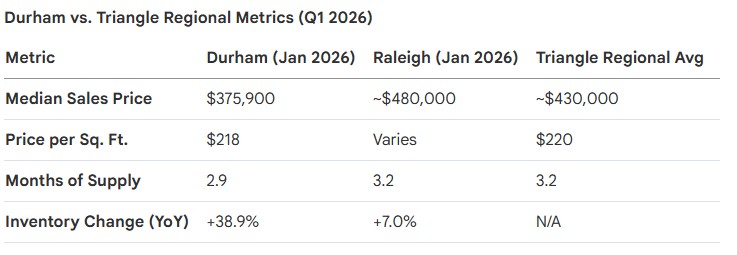
The "So What?" Factor: Durham’s long-term play is superior to Raleigh’s due to a tighter supply pipeline. While Raleigh is struggling with an oversupply of multifamily units leading to concessions on 52% of listings, Durham maintains a lower vacancy risk. Furthermore, the "rate lock-in" effect—where 80% of North Carolina homeowners hold mortgage rates below 6%—is constricting existing home supply, making the sub-$500k entry point a scarce and valuable asset class for appreciation.
3. Rent Potential & Cash Flow Metrics
Durham’s rental market remains resilient, boasting a 94.8% occupancy rate (peaking at 95.7% in East Durham). The city offers a diversified rental engine, capturing tech professionals from the "Silicon Valley of the East" alongside steady academic and medical institutional demand.
**Key Financial Markers (2026 Projections): **
- Gross Yield: 7.9%
- Net Yield: 5.9%
- Cash IRR: 9.2%
- Monthly Cash Flow: ~$1,350 (Targeting 3BR assets)
- Combined Tax Burden: 10.75% (Includes 4.75% State + 6% Local Occupancy Tax)
The "So What?" Factor: Unlike Raleigh’s cooling rental market, Durham’s "lifestyle ROI" sustains pricing power. Investors must, however, factor the 10.75% combined tax burden into their pro-formas. The tightest vacancy rates are currently found near Duke Hospital and the RTP corridor, where the "meds and eds" economy ensures consistent lease renewals even as broader national economic indicators fluctuate.
4. The Livability Angle: Where Innovation Meets Historic Soul
Durham’s designation as a "Top State for Business" is inextricably linked to its cultural and lifestyle appeal. It offers an "amenity-driven appreciation" model that resonates with the millennial workforce and remote professionals.
The Three Pillars of Durham Livability:
-
The Innovation Hub: Proximity to RTP is complemented by the American Underground and the city’s "Black Wall Street" heritage, fostering a nimble, entrepreneurial economy that attracts Silicon Valley-level talent.
-
The Cultural Core: Known as the "Brooklyn of the South," the city center features the Durham Performing Arts Center (DPAC), the historic American Tobacco Campus, and a nationally ranked "foodie" scene at Brightleaf Square.
-
**The Green Network: **Superior access to the Eno River trail systems and Duke Gardens provides the high-quality outdoor metrics that today's high-value tenants demand.
The "So What?" Factor: Durham scores an 82/100 for healthcare and a 70/100 for governance, indicating a stable urban environment. Renovated bungalows in walkable historic districts like Cleveland-Holloway or Trinity Park are not just rentals; they are lifestyle assets that command a premium due to the city’s high "Quality of Life to Cost of Living" ratio.
5. Investor Watchlist: The "One Caution" & Risk Mitigation
Success in Durham requires navigating a complex regulatory landscape and high hyper-local variance.
Risk Mitigation & Pre-Purchase Checklist:
- "Imminently Dangerous" Housing Code: A 2026 regulation prevents landlords from collecting rent if a property is cited for unsafe conditions (e.g., lack of drinkable water, insecure locks, unsafe electrical). Professional inspections are non-negotiable.
- Zoning & STR Restrictions: Short-term rentals (STRs) require a Special Use Permit (SUP). In R-5 and R-10 residential zones, STRs are restricted to owner-occupied properties only, making a long-term or mid-term (medical professional) strategy the safer 2026 play.
- Physical Asset Risks: Investors must inspect for red clay soil foundation settlement, radon gas, and evaluate properties for the regional frequency of Duke Energy power outages.
Target Neighborhood Tiers:
- Tier 1 (High Risk/High Yield): Crest Street (Entry: 200k-300k; Yield: 8%+).
- Tier 2 (Medium Risk/Balanced): Hope Valley Farms (Entry: 300k-400k; Yield: 6.5%).
- Tier 3 (Low Risk/Stable): Old West Durham (Entry: 400k-500k; Yield: 5%).
6. Daily Brief Summary: The TL&DR for Social Sharing
- City: Durham, NC
- Buy Confidence: 82% (Strong Buy)
- Price Band: $274k - $495k (Median: $375,900)
- Financial Hook: 9.2% Cash IRR and a 7.9% Gross Yield in a stabilizing market.
- Livability Hook: "The Brooklyn of the South"—A tech-fueled "meds and eds" economy meeting historic soul and a world-class culinary scene.
- The Big Caution: Zoning for STRs is restrictive; prioritize long-term rentals and clear the "Imminently Dangerous" housing code inspection before closing.
SEO Metadata:
- Keywords: Durham NC real estate 2026, Research Triangle investment property, homes under $500k North Carolina, Durham rental market trends, Duke University housing demand, RTP tech worker housing, Durham STR regulations 2026.
Written by
Under500K Team
Research and market insights for global property investors.