Discover how the 2026 geopolitical shock reshaped GCC real estate. Explore the new investor playbook focusing on cash flow, capital rotation, and asset quality.
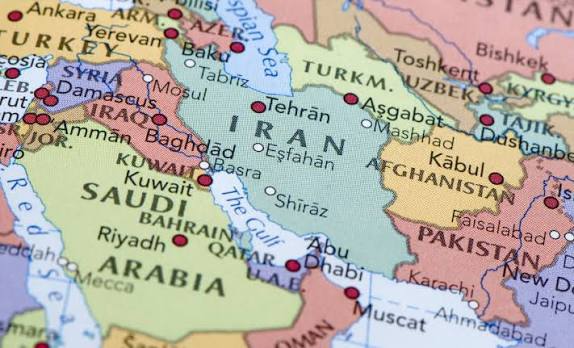
In February 2026, the global real estate community held its collective breath. Military escalations involving the United States, Israel, and Iran reached into the airspace of major UAE cities, posing a direct threat to the core economic zones of the Gulf. For years, the Gulf Cooperation Council (GCC)—and particularly the UAE—has marketed itself as the ultimate stable destination for global capital. Overnight, that "safe haven" thesis was put to the ultimate stress test.
Did the market break? No. But it has fundamentally changed.
If you are considering investing in Middle Eastern real estate today, the era of blind, momentum-driven speculation is over. Here is your guide to navigating the new reality of the GCC property market.
The "Liquidity Freeze" and the Power of Cash
The immediate reaction to the geopolitical shock was a sharp drop in transaction activity—buyers stepped back, and sellers paused. However, this liquidity freeze did not trigger a market collapse. Prices across prime segments remained remarkably stable.
Why didn't the market crash? The answer lies in the composition of the buyers. In 2026, over 80% of UAE property transactions are cash-based. Unlike highly leveraged Western markets, the GCC real estate system is largely insulated from panic-driven, forced selloffs because high equity ownership severely limits financial pressure on landlords. Investors simply delayed their decisions rather than exiting the market.
A Regional Capital Rotation: Where is the Smart Money Going?
Capital hasn't fled the GCC; it is actively rotating within it. Here is how the major players are faring:
- The UAE (Dubai & Abu Dhabi): A structural split is clear. Dubai's highly liquid, internationally exposed market reacted quickly to shifting sentiment, while Abu Dhabi's tightly controlled supply and institutional focus have kept it insulated. Dubai remains incredibly attractive due to its absolute tax efficiency—0% annual property tax, 0% rental income tax, and 0% capital gains tax. For cash flow investors, established areas like Business Bay, Jumeirah Lake Towers (JLT), and Dubai Creek Harbour remain top performers, offering high tenant demand and gross yields around 6.5% to 9%.
- Saudi Arabia: The Kingdom is scaling back some of its massive mega-project ambitions to focus on sectors with clearer economic returns. However, a massive catalyst is on the horizon: the Law of Real Estate Ownership by Non-Saudis. Taking effect in January 2026, this landmark reform allows foreigners and corporate entities to acquire property in designated zones. While subject to a combined 10% burden in fees and taxes, this structured opening is a game-changer for international investors looking to tap into Riyadh's booming corporate demand.
- Oman: The Sultanate is quietly emerging as a major beneficiary of the regional shock. Property demand and prices have shown strong growth as investors seek alternative, stable entry points. Foreigners can access freehold homes in Integrated Tourism Complexes (ITCs) like AIDA in Yiti or Al Mouj Muscat, with recent reforms to the Golden Residency program making it highly attractive for long-term expat families.
The Hidden Risks You Can't Ignore
While existing assets are holding their value, the off-plan and development sectors are facing severe headwinds. The disruption of the Strait of Hormuz has crippled maritime traffic, driving up the costs of steel, cement, and aluminum at double-digit annualized rates. For developers, margins are compressing, leading to project delays and the invocation of force majeure clauses.
Furthermore, investors must be wary of supply gluts. In Dubai, a massive pipeline of over 120,000 apartment units expected in 2026 threatens to put downward pressure on pricing in specific, concentrated sub-markets.
The 2026 Investment Playbook
With the local benchmark interest rate (EIBOR) sitting around 5.3% to 5.5%, the cost of borrowing is high. Success in today’s market requires extreme selectivity.
1. Focus on Cash Flow and Yield Spreads Your rental yield must meaningfully exceed the risk-free rate to justify the investment. In high-density areas like JLT, savvy investors are buying older, larger units and renovating them to command premium rents, dramatically outperforming new off-plan stock.
2. Prioritize Asset Quality Over Infrastructure Promises In previous cycles, the promise of new infrastructure was enough to drive speculative buying. Today, asset-level fundamentals—such as build quality, prime location, and guaranteed income stability—are under intense scrutiny.
3. Beware the Off-Plan Premium In certain highly desired areas like Business Bay, the median price for off-plan properties has severely decoupled from ready units, with off-plan sometimes costing millions of dirhams more than equivalent ready properties. In a high-rate environment, ready units that generate immediate cash flow are generally the safer bet.
The Verdict
The 2026 geopolitical crisis did not destroy the GCC real estate market; it matured it. The days of guaranteed returns simply by participating in the market are over. But for the disciplined investor who focuses on rigorous asset selection, stable cash flow, and localized supply dynamics, the Middle East remains a landscape of profound opportunity.
Click here for the latest city under500k.ai report for Doha, Qatar.
Click here for the latest under500k.ai city report for Kuwait City.
Click here for the latest under500k.ai city report for Dubai, UAE.
Written by
Under500K Team
Research and market insights for global property investors.